Business cards collected at an event have a short half-life. Most are photographed, filed in a folder and never contacted. A digital business card fixes the first half of that problem: the contact arrives as data. This post is about the second half, turning that scan into a pipeline that actually gets worked.
Step 1: make the card do the capture
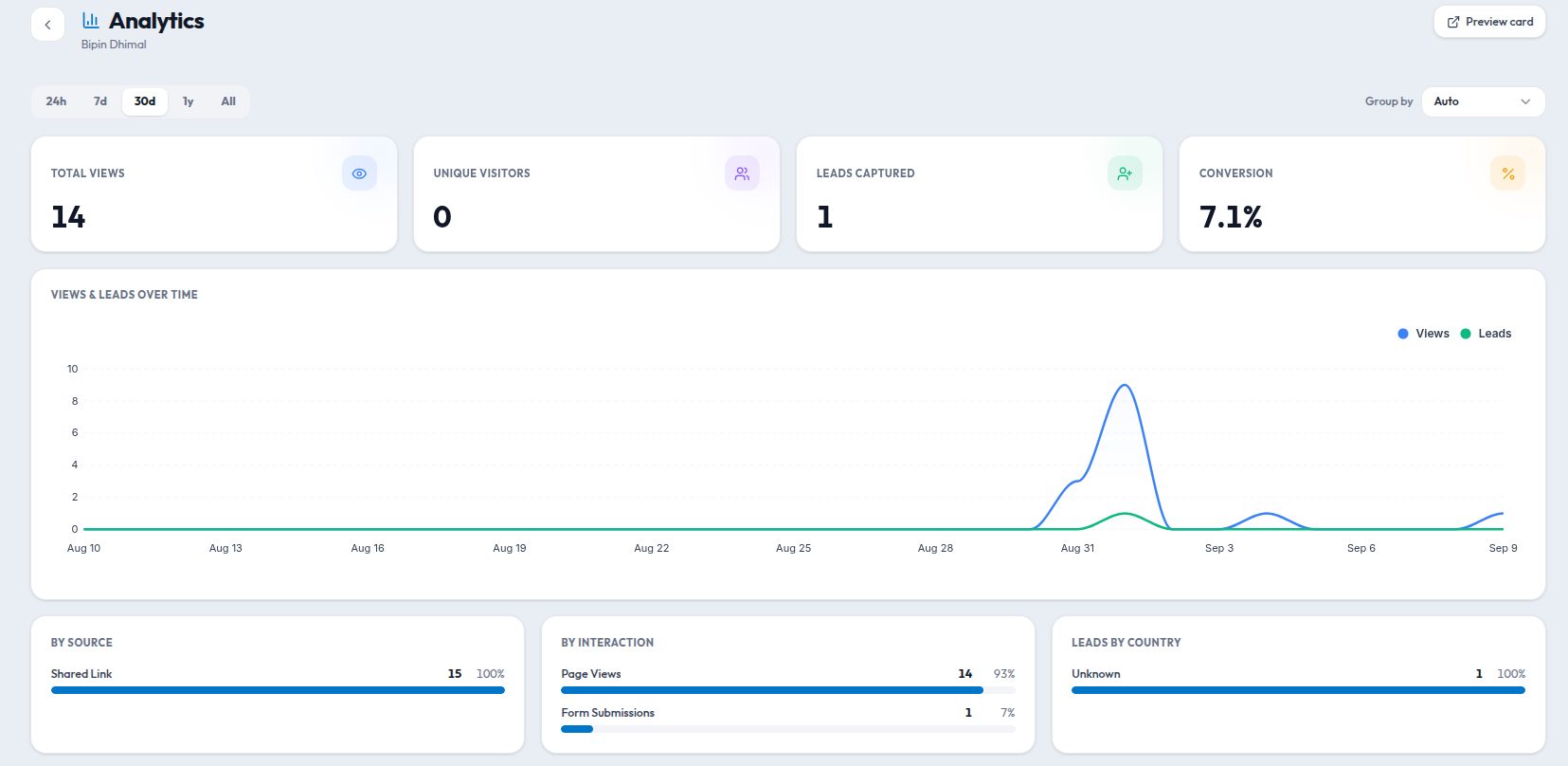
A Kydero card is a public page with a QR code and an NFC link. When someone scans it they see your profile, and they can save your details or leave theirs. That second action is the important one. Every "share your details" submission creates a contact in your workspace with the name, email, phone and a note about where you met, and the card's analytics record the scan.
Two settings matter here:
Intake pipeline. Decide which pipeline new captures land in. For events, a dedicated "Event leads" pipeline keeps them separate from inbound web leads.
Auto-create a lead. A bare card fill creates a contact only. If the visitor also answers your qualifying question (company size, interest, budget), Kydero creates a lead in the first stage of the intake pipeline.
Step 2: a pipeline with honest stages
Stages should describe what the customer has done, not what you plan to do. A pipeline that reads "Call, Email, Follow up" is a to-do list, and to-do lists stall. This is the layout we recommend for event leads:
Stage | Customer action | Exit rule |
|---|---|---|
New | Left details at the event | First reply received |
Engaged | Replied or booked a call | Discovery call held |
Qualified | Confirmed a need, budget and timeline | Proposal sent |
Proposal | Reviewing an offer | Decision made |
Won / Lost | Signed, or told you no | Reason recorded |
Every stage carries a win probability, so the board's weighted value is a forecast rather than a wish.
Step 3: follow up inside 24 hours
Reply speed is the single biggest predictor of whether an event lead converts. Set a follow-up date on every new lead the same evening, and use the lead's activity timeline to send the first email from the CRM so the reply lands in the same thread. If the person booked a call through your card, the appointment already sits on the lead with the meeting link attached.
Rule of thumb: if a lead has no next step scheduled, it is not in the pipeline. It is in a list.
Step 4: work the board, not the inbox
Once a week, open the pipeline board and do three passes:
Overdue follow-ups. Anything past its date gets a reply or a new date today.
Stuck leads. Leads that have not moved in 14 days get a direct question: "Is this still worth your time?" A quick no is a good outcome. Record the lost reason.
Won deals. Move them, and let Kydero create the project. The kickoff tasks come from a template, so delivery starts the same day the deal closes.
What to measure
Scan to contact rate: how many card views turn into a saved contact. Below 20 percent usually means the card asks for too much.
Contact to lead rate: whether your qualifying question is doing its job.
Time to first reply: the number to obsess over in the week after an event.
Stage conversion: where leads fall out, which tells you which conversation needs work.
None of this needs a bigger team. It needs the capture to be automatic, the stages to be honest, and a weekly habit of moving cards. The card does the first part on its own; the rest is a 30-minute routine.